
Immanentized Eschaton
Nothing Has Been The Same

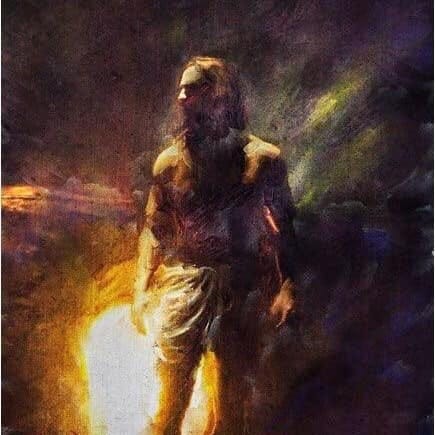
Imagine what it must of been like to find your executed Rabbi alive again. Actually, it’s almost impossible. But you might have an idea of the magnitude. After Christ’s body was taken down, prepared for burial, and laid to rest in a borrowed tomb, the story seemed over, even to His followers. The Gardner near the tomb. The Emmaus Road. The Upper Room. According to Paul in around 50 AD (about 27 years from events), the risen Jesus appeared to the remaining 11 as well as to more than 500 at one time, most of whom were still alive at the writing—you could go ask them. If you think a mere 27 years is a short gap, keep in mind that Paul, in the same paragraph, starts off verse 3 with an old formula predating his letter. So, we are within a few years of the resurrection in just this one chapter.
Why is that so important? I don’t consider myself a moron. And I also don’t care anything about self-medicating to bulwark my beliefs, especially if they aren’t true. That’s not my lane. It’s Disney’s. But, still, the idea of someone being mutilated to death and then walking out of a tomb sounds crazy. Here’s what 18th century Scottish pragmatist David Hume thought of it:
When anyone tells me, that he saw a dead man restored to life, I immediately consider myself, whether it be more probable, that the person should either deceive or be deceived, or that the fact, which he relates, should really have happened. I weigh the one miracle against the other; and according to the superiority, which I discover, I pronounce my decision, and always reject the greater miracle. If the falsehood of his testimony would be more miraculous, than the miraculous event which he relates; then, and not till then, can he pretend to command my belief or opinion. - David Hume, Philosophical Essays Concerning Human Understanding
Dead people just don’t get up out of the grave, except in the movies. Movies aren’t real. Christians believe crazy things. Let’s not try to sidestep that fact. We believe a man died, was buried, then walked out of his tomb on early Sunday morning, about 2,000 years ago and is coming back to judge the world. That’s crazy.
Crazy doesn’t mean false. In fact, crazy is a disruption to our familiar cognitive patterns, for better or worse. Sometimes our familiar cognitive patterns are the sickness and crazy is for the better. That applies here.
Researching history is fundamentally different from testing hypotheses through experimentation. That’s because all the people, places, events are gone. They aren’t here anymore. So, the historian has a different task than the normal scientist. She has to interrogate what facts surrounding an event there are, which are contemporary writings about it. If they don’t exist, you want something as close to it as you can get. You want many such sources so you can compare and contrast. You need to have an idea of the sources used by those sources. Were they provided by a lady who rose out of a lake or a merchant who saw an angel in a cave? Or were they eye witnesses?
I’ve never heard anyone, even academics, reject the resurrection of Jesus for historical reasons. They’re always based on a refusal to accept miracles or the supernatural. I mean, if God exists, then it’s not a stretch that God can raise someone from the dead. But if thinking God exists breaks the rules of your worldview, then such a thing can’t happen. But that’s a bias, not academic. In fact, from a historical standpoint, the resurrection is probably the best attested event in all of classical history. If you look at the sources, which would be the four Gospels and Acts, five facts emerge that are incontrovertible.
Jesus was executed under the reign of Pontius Pilate.
His body was prepared and buried in a tomb belonging to a wealthy member of the Sanhedrin, Joseph of Arimathea.
On early Sunday morning, some of Christ’s women followers discovered Christ’s tomb empty.
In different occasions, before one or more followers, even enemies, Jesus appeared bodily resurrected.
Despite having no cultural or religious background to believe this, Christ’s followers believed He was resurrected from the dead. They even went to their death refusing to recant this belief.
I call these facts because they qualify and because even non-believing academics whose job is to study these sources agree with them. So, aside a miracle of bodily resurrection, what best explains those five historical facts?
Nothing.
That’s the thing resurrection does to us. Even faced with it, we still have a choice to believe it or not, even if we have zero reasons not to believe it. Each human being faced with those facts are forced to deal with them one way or the other. And, in a world where death rules all of life, that’s practically impossible. When you experience the move of God’s Spirit in this decision, it’s practically impossible to reject it—for the same reasons. Skepticism is ruled by fear and familiarity, even if the familiar is dark. Faith is ruled by hope and a new way of seeing everything. That’s given, not conjured; not as some magical experience but as divine help to see above the murky waters of banality.
What happened in this Roman backwater province 2,000 years ago was a quake that shifted continents, calendars, cultures. And it still does. On a personal level, I have the light of the world within this cynical self, co-existing together and changing things within me. I’m told this is the same power that rose Jesus to life way back then. The same power that defeated death dwells with me, changes me, gives me endurance when I have none, hope when I have none, peace when there is none.
In 1952, a German philosopher, Eric Voegelin, defined a new term in his book The New Science of Politics. The term is immanentizing the eschaton. It was meant as a pejorative term describing how people can try to force the end of the world to happen, typically through violence or disruption of order. Although the term was meant in a negative sense, I like it. I like it because Jesus immanentized the eschaton Himself. He disrupted the order of things. He also disrupted my own life. Both in a good way. A very good way.
Without the resurrection, there’s no Christianity. That goes without saying without the crucifixion there’s no Christianity because without a death, there’s no resurrection. You need both. People who claim Christianity but reject either Christ’s death on the cross or His bodily resurrection simply aren’t Christians. They can’t redefine what that word means by their own personal religious preferences. No one can.
The eschaton has already happened, is still happening, and is yet to happen. It all started that early Sunday morning. It was day 1 of a new age. On October 25, 1996, I embraced day 1 of my own new age. The world has never been the same. Neither have I. And as this new age approaches its own culmination, we all wait. And waiting is living, not retreating. Sometimes that’s not comfortable to me. But I came into this world living in light of death. It makes sense that it will take some time for me to live in the light of glory. Where it leads is even crazier. It leads to new bodies immune to decay, sickness, or limitation. These bodies rule and reign with Christ in our expansive universe. That may be why it’s so expansive in the first place. It takes an eternity to fill.
The eschaton wasn’t just immanentized by Jesus. It continues through His followers. According to Paul, the Gospel was first given to the Jews and then the Gentiles. The Gentiles were all those nations disinherited in Genesis 11. Paul refers to reaching the objective of the Gospel as “the fullness of the Gentiles.” What happens at that point? Judgment. Rebirth. The beginning of an eternal age. From now until then, we continue manifesting the eschaton, without realizing it, by our obedience in extending the Kingdom we received to others, all done through God’s grace.
As the Kingdom extends, it disrupts, loosens, binds, knits, recreates in the midst of what it had disrupted. This is what every confessing and believing follower of Jesus has brought to this world since then. It has eliminated the death culture of ancient Rome. It has liberated those in bondage, both spiritually and literally. It is the single most important event in all history, in which its impact continues to be felt going forward.
If you’re not a Christian because the ideas we have are crazy, I get it. They are. And I was right there with you once. But crazy or not, they’re true. To this day, I am still open to hear or read something to challenge it. So far, those challenges have been lame. On a level, that disappoints me. I’m not sure why that is. Maybe that old part of me that would like to lie in my own grave and just let time pass still has some appeal. But each moment that passes, it’s less and less.
12 Now if Christ is proclaimed as raised from the dead, how can some of you say that there is no resurrection of the dead? 13 But if there is no resurrection of the dead, then not even Christ has been raised. 14 And if Christ has not been raised, then our preaching is in vain and your faith is in vain. 15 We are even found to be misrepresenting God, because we testified about God that he raised Christ, whom he did not raise if it is true that the dead are not raised. 16 For if the dead are not raised, not even Christ has been raised. 17 And if Christ has not been raised, your faith is futile and you are still in your sins. 18 Then those also who have fallen asleep in Christ have perished. 19 If in Christ we have hope in this life only, we are of all people most to be pitied.
The Holy Bible: English Standard Version (Wheaton, IL: Crossway Bibles, 2025), 1 Co 15:12–19.
Keep reading. We do have hope.
Sorry David Hume.